Thursday, August 4, 2011

Discuss Differences Between RAM and ROM

We have already discussed the topics:
1. What is RAM, Explain Different Types of RAM
2. What is ROM Explain Different Types of ROM
Here we discuss differences between RAM and ROM

13 Differences Between RAM and ROM

Thirteen Differences Between RAM and ROM

Sr # RAM ROM
1 RAM stands for Random Access Memory ROM stands for Read Only Memory.
2 RAM is a temporary memory. ROM is a permanent memory.
3 RAM is a volatile memory. ROM is a non volatile memory.
4 When computer is turned off, all data and programs are
erased from RAM. 
When computer is turned off, all data and programs are
retained in ROM.
5 RAM is a Read / Write memory. Data can be read and written
to RAM.
ROM is a read only memory. Data from ROM only can be read
and not written.
6 Data and programs in RAM can be changed. The contents of ROM cannot be changed.
7 Data or programs in RAM can be deleted. Contents of ROM cannot be deleted.
8 The instructions and data  are written (loaded) in RAM
at execution time, when computer is working.
The instructions in ROM are written at the time of
manufacturing.
9 RAM is used to load data and programs currently running. ROM contains the instructions that help the computer to
start-up and make it ready for work.
10 RAM is much faster than ROM. ROM is slower than RAM.
11 RAM has two main types: Static RAM and Dynamic RAM ROM has three types: PROM, EPROM and EEPROM
12 Physically RAM chip is larger than ROM chip. Physically ROM chip is smaller than RAM chip.
13 Picture of RAM is:
Differentiate between RAM and ROM
RAM
Picture of ROM is:
Explain Differences between RAM and ROM
ROM

These were the differences between Random Access Memory and Read Only Memory
You may also like:

Wednesday, August 3, 2011

What is ROM Explain Different Types of ROM

Topic: What is ROM Explain Different Types of ROM

ROM


ROM stands for Read Only Memory, because its contents can be read and used only and we cannot change or delete its contents. It is a non volatile memory. Its retains its contents even after switching off the computer. Therefore, ROM does not require electricity to retain its contents. ROM is a permanent memory. The instructions in ROM are written at the time of manufacturing by the manufacturer.  

Importance of ROM in Computer System


1. One important reason a computer needs ROM is that instructions stored in ROM (called ROM BIOS - Basic Input/Output System)execute on start-up of computer and guide the computer what to do. They make the computer ready for work.
2. ROM contains a set of start-up instructions to check that memory is functioning well and check for other hardware devices.
3. These instructions also check for an operating system and load its necessary part into RAM, so that a user interface for example "Windows Desktop" is displayed on computer screen. Now computer is ready to work with. A user now can easily perform work on computer.

Where ROM Chip is installed in Computer?


ROM chip is fixed on motherboard as shown in the figure: AMIBIOS -American Megatrends ROM chip.
Where ROM Chip is installed in Computer?
Another picture of Rom


Types of ROM


Following are the types of ROM

  • PROM

PROM stands for Programmable Read Only Memory. Instructions can be stored in PROM only once. Then it becomes ROM and we cannot change instructions in it. Initially PROM is a blank chip. Once instructions are written on it, then it become ROM. Now we cannot change or delete the instructions. If there is any error in writing instructions then PROM chip becomes unusable.
  • EPROM

EPROM stands for Erasable Programmable Read Only Memory. Program instructions written on EPROM can be erased and changed with the help of ultra violet rays. So if once we write instruction on this chip with errors, we can erase wrong instructions and rewrite new instructions.
  • EEPROM

EPROM stands for Electrically Erasable Programmable Read Only Memory. Program instructions written on EEPROM can be erased with the help of electricity and rewritten.

What is RAM, Explain Different Types of RAM

Today we are going to discuss Different Types of RAM, that is, Random Access Memory.


RAM    /    What does RAM mean


Ram stands for Random Access Memory. Data in RAM can be accessed directly. That is, we can access data directly from any location of RAM in the same time. This Random Access quality makes RAM a very fast memory. RAM is volatile. Data and programs in RAM are erased when computer is turned off.

What does RAM do

Therefore RAM is a temporary memory. It is used to store those data and programs, which are currently being executed by CPU. Ram is also called Primary Memory or Main Memory.

Where RAM memory chip is installed?


RAM chip is installed into one of the memory slots on motherboard, as shown in the figure:
What is RAM? Explain Different Types of RAM

What does RAM mean


Importance of RAM.


1.  A Program must be laoded in RAM for execution.
The programs and data currently being executed are in computer's main memory, that is, in RAM. The programs and data needed by these programs is loaded into RAM and run from this memory for FAST ACCESS. Because hard disk is very slow device, every program we run, is loaded into RAM from hard disk first, and then it is executed by processor. CPU is very fast device, it can take instructions and data to execute from RAM much faster than from a hard disk. 


2. RAM is an  Important Factor in increasing Speed of Computer

One of the most important factors affecting the speed and power of a computer is the AMOUNT OF RAM it has. Normally, the more RAM a computer has, the more speed and power of working it has.In fact,  if a computer with a very fast processor has inadequate amount of RAM, it may still run slowly, especially when running multiple programs.
what are the types of  RAM
Discuss Different Types of RAM Random Access Memory/ what are the types of  RAM

Types of Ram

What are the types of  Ram


There are two main types of Ram.

  • Dynamic Ram (DRAM)

Dynamic Ram is widely used in personal computers. It is a cheaper kind of RAM. DRAM stores data in the form of an electric charge. DRAM loses electric charge with the passage of time, so DRAM needs to be refreshed frequently. Otherwise, it may lose data. Dram is recharged many times in a second. Therefore, it is slower than SRAM. Since CPU cannot access the data from DRAM while it is in the process of refreshing or recharging.

  • Static Ram (SRAM)

Static Ram does not need to be refreshed again and again. So processor can access data from static RAM faster than DRAM. There is no time wastage in refreshing the memory again and again. Static RAM is more expensive and faster than DRAM. Static Ram is used to build a very fast memory called CACHE (pronounces 'cash' ) memory.

Monday, August 1, 2011

What are Dual Devices or Both Input/ Output Devices

The devices that can be used to perform both functions -input and output- are called Dual Devices. These devices are also called Dual Purpose Devices or Both Input/Output Devices. With the help of a dual purpose device, we can enter data into computer as well as we can output data from the computer to outside world.  For example, Dual devices include:  Touch Screen Monitor, Modem, Network Interface Card, Sound card, Hard disk drive, Floppy disk Drive, Magnetic Tape Drive CD-Writer and DVD-Writer etc. These are also called Input/output devices, because they perform both functions.
  • Touch Screen Monitor
Dual Devices or Both Input / Output Devices - Touch screens
Touch Screen Monitor is an input/output device. It uses a special touch sensitive screen. The User can enter data by touching icons or menus on the screen. As soon as the user selects a command from menu, output is displayed on screen. Commonly touch screen monitors use sensors to detect touch of finger.

  •      Headset

A headset may be considered as both Input / Output device, because it has a microphone for voice input and small speaker phones for  sound output.

Examples of Dual Devices or Both Input / Output Devices - headsets
Example of Both Input / Output Devices - headsets

Headsets are used for video conferences and video calls through SKYPE and other such free software to make video calls.
  • Modem
Modem is example of Dual device
Internal modem

External modem

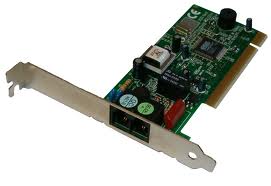
Modem stands for Modulator / Demodulator. Modem is a communication device.  It makes possible receiving data from internet into our computer (input) and sending data from our computer to another computer on internet(output).  It performs two functions: Modulation (converting digital signal into analog signal) and Demodulation(converting analog signal to digital signal). It makes possible receiving data from internet into our computer (input) and sending data from our computer to another computer on internet(output). Modem sends and receives data from one computer to another through telephone lines. It links your personal computer to the Internet through your ISP (Internet Service Provider). A telephone line supports only analog signals, whereas computer accepts only digital signals. So when a computer wants to send data to another computer, digital data is converted into analog data before placing on telephone line. The process of converting digital signal into analog signal is called Modulation. Similarly, on the receiving computer, modem converts analog data (from telephone line) into digital data, before it is entered into receiving computer. The process of converting analog signal into digital signal is called Demodulation.
  • NIC - Network Interface Card
NIC is Example of Dual devices
NIC or LAN card - NIC is Example of Dual devices

NIC stands for Network Interface Card. It is used to link network computers for transmitting data. With the help of NIC our computer can receive  data, instructions and information from another computer (input). NIC will also be helpful to send data from our computer to another computer on the network (output). NIC is also called a LAN card, local area network card or LAN adapter.

  • Sound Card
Sound card is Example of Dual devices
Sound card or audio card

A sound card is a computer component that facilitates the input and output of audio signals to and from a computer. A speaker produces audio output with the help of sound card. In addition we use microphone to input our voice into computer with the help of sound card. 
  •     Hard disk Drive
Dual devices or both input output devices

Hard disk drive is an input/output device. It has read/write heads to read data from hard disk(input) and to write data to hard disk(output).
  • Floppy disk Drive
Dual devices or both input output devices

Floppy disk drive is an input/output device. It has read/write heads to read data from floppy disk(input) and to write data to floppy disk(output).   
  • Magnetic Tape Drive
Dual devices or both input output devices

Magnetic Tape drive is an input/output device. It has read/write heads to read data from magnetic tape(input) and to write data to magnetic tape(output).
  • CD-Writer / CD-Recorder
Dual devices or both input output devices
CD-Writer is an input/output device. It is used to store data on CD. It is used to read data from CD(input) and to write data to CD(output).
  • DVD-Writer / DVD-Recorder
Dual devices or both input output devices

DVD-Writer is an input/output device. It is used to store data on DVD. It is used to read data from DVD(input) and to write data to DVD(output).

Tuesday, July 26, 2011

Explain Parts of CPU and its Working

CENTRAL PROCESSING UNIT / CPU / Microprocessor / Processor


Central processing unit is the brain of computer. It is also called CPU or processor. Processor is used to process data according to given instructions. It performs arithmetic and logical operations on data.
Parts / Components of CPU / Processor on computergap.com

It controls all activities of different parts of a computer. As brain in human body controls all other parts of body and takes decisions, CPU controls all other parts of the computer and their working. A CPU has three basic parts: Arithmetic Logic unit, Control unit and Registers.
Parts Components of Processor or CPU on computergap.com
Parts of Microprocessor or Processor or CPU or Central Processing Unit computergap.com

1.    ARITHMETIC LOGIC UNIT (ALU)


ALU performs data processing according to given instructions. All computations are done in this unit. ALU is the real place in computer where actual execution of instructions takes place. ALU may be further categorized into two sections according to their function:
ARITHMETIC SECTION of ALU performs arithmetic operations like addition, subtraction, multiplication and division on data.
LOGIC SECTION of ALU performs logical operations like comparison between two values. For example, 10>5 will give TRUE answer. And 5<1 will give FALSE answer. Control unit sends data and instruction to perform calculation on the data to the ALU. ALU then performs this calculation. 

2.    CONTROL UNIT


Control unit controls all over operations of different parts of computer. For example it takes data and instructions from input unit and stores it into memory. It sends data to ALU for processing. It takes results from ALU and sends it to output device. It can also store results in memory. Control unit performs all these functions by giving commands to relevant part of the computer.
Control unit performs following four functions for executing instructions of a computer program.

  1.  Fetching: obtaining instruction from memory
  2.  Decoding: understanding this instruction
  3.  Data Fetching: If needed, obtaining data from memory
  4.  Executing: Control unit sends the instruction and data to ALU for taking suitable action on the instruction

3.    REGISTERS


A register is a very small and temporary memory area in ALU. It holds instruction and data as long as it is being processed by CPU. When instruction and data is fetched from memory then it is stored in a register. ALU contains a number of registers for example AX, BX, CX, DX etc. A Register may be of 8 bits, 16 bits, 32 bits or more.

Thursday, July 21, 2011

Explain Different Types Of Output Devices

Output devices


Out put devices are used to display results of processing to the user. They perform the following functions:
  1.  Receive results from memory
  2.  Convert data into human readable form
  3.  Display results to the user

Examples include: Monitor, printer, plotter, speaker, and multimedia projector.

Different Types of Output Devices


1.    Monitor
Monitors, Different Types of Output Devices
LCD Monitor

CRT Monitors, Different Types of Output Devices
CTR Monitor
   

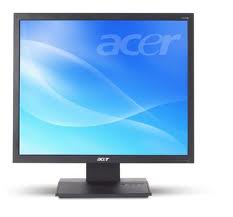
Monitor is the most commonly used output device used to display results of processing. It has a TV like shape. Pictures on monitor are formed with picture elements called PIXEL. Monitors may be Monochrome that will display results in Black & White. Color Monitors are also available. They display results in multi colors. Monitor produces soft copy output.


2.    Printers

Printers are used to produce hard copy out put. They print processing results on paper. Printers are divided into two main categories:
·    Impact Printers
·    Non Impact printers

Impact Printers.
Impact Printers, Different Types of Output Devices

These printers print with striking of hammers or pins on ribbon. For example Dot Matrix printer and daisy wheel printers are impact printers.

Non-Impact Printers.
Non-impact Printers, Different Types of Output Devices

These printers do not use striking mechanism for printing. They use electrostatic and laser technology. Quality and speed of these printers is better than Impact printers. For example Laser printer and Inkjet printers are non-impact printers.

3.    Speaker and Headsets
Speakers, Different Types of Output Devices
Speakers for Desktop computer

Speakers and head sets produce sound output. We can listen recorded voices, sounds or music with the help of speaker or headset. Speaker produces sound output with the help of sound card.
Headsets - used to produce audio output


4.    Plotter
Plotters, Different Types of Output Devices

A plotter is an output device used to produce image-quality graphics in a variety of colors. Plotters are used to print large maps, architectural drawings, graphs and charts. Plotters are used to draw different designs of buildings or internal structure of machines. Plotters offer the fastest way to efficiently produce very large drawings or color high-resolution graphics. Engineers and Architects use plotters.

5.    Multimedia Projector.
Multimedia Projectors, Different Types of Output Devices
Multimedia Projector

Multimedia projector is used to produce computer output on a big screen. These are used in meeting rooms or in classrooms of educational institutes. Since the output produced by multimedia projector is displayed on a large screen, it can be viewed by a large number of people in a hall, meeting / conference room or a class room. Mostly teachers use data projectors in class rooms for delivering lectures ( a use of audio visual aids technology)


Wednesday, July 20, 2011

What are Different Types of Input Devices With Examples

Topic: Different types of input devices of a computer system with examples, pictures and explanation: 

Topics Covered are:

  • Definition of Input Devices

  • Functions of Input Devices ( How input devices work? )

  • Examples of Input Devices

  • Pictures / Images of different input devices

Different Examples of Input Devices With Description

  1. Keybboard
  2. Mouse
  3. Trach Ball
  4. Trackpad
  5. Joy Stick
  6. Light Pen
  7. Microphone
  8. Scanner
  9. Graphic Tablet ( Digitizer )
  10. Digital Camera
  11. Touch Screen ( I/O Device / Dual Device - Perform Both Functions input + Output )

INPUT DEVICES ( Definition )

Input devices are used to enter data and instructions into computer memory from external world. Input Device is a hardware part of the computer that is used to enter data and instructions into computer memory. The examples of input devices include: Keyboard, Mouse, Track ball, Track Pad, Joy stick, Touch Screen, Light pen,  Scanner, Digital Camera, Microphone, Graphics tablet etc. They (input devices) perform three main functions.
Different Types of input devices with examples and description of each computer


Three Functions of Input Devices

Input devices perform three main functions:
  1. Input devices Receive data from user. For example,  user enters data from keyboard by typing numeric number 5
  2. Input devices  Convert data into binary form [the language of 0 and 1 also called the machine language. Machine language   is the only language, a computer can understand directly.]

For example decimal number 5 will be converted to binary number 101.
5/2     quotient =2  remainder =1
2/2     quotient =1  remainder =0
1/2     quotient =0  remainder =1
so we write remainders from bottom to top (101) which is binary equivalent of decimal 5.
  1. Provide converted data in binary form (101) to computer memory for processing.

Following are the introduction to some popular types of input devices:

1.     Key board


different types of input devices of computer - keyboard

Keyboard is the most familiar input device. It is most widely used input device to enter data and instructions into the computer. Keyboard has a set of keys like a typewriter. It has alphabetic keys for A,B,C…Z or a,b,c,…z. It has numeric keys like 0,1,2,3,…9. It has function keys F1, F2,…,F12 used to perform specific tasks.
It has other keys used for editing like Delete, Backspace, Home, End, etc.

2.    Mouse

Mouse input device on computergap.com
Mouse -  Types of input device
Mouse is an input device used to control motion of the pointer on screen. A mouse has two or three buttons. These mouse buttons are called Left, Right and Middle button respectively. Buttons are used to perform different functions. A mouse has a rubber or metal ball inside its body. Mouse is rolled over a flat surface called mouse pad. The movement of ball is detected by internal circuits of mouse. These circuits convert this movement into digital signals, which are sent to computer. Mouse is used in graphical applications. It is also used for playing video games on computer.

3.    Track Ball

Track Ball
Track ball - a type of pointing input device
Track Ball is an input device like a mouse. It is a pointing input device. It is used in Lap top / notebook computers to control motion of pointer on screen. It is a pointing device like upside down mouse. It has a ball on its upper side. This ball is moved by fingers or thumb and the pointer moves accordingly on screen.

4.    Track Pad

Touch Pad
track pad / touch pad input device

Track pad is a pointing input device. It is used in Lap top computers to control motion of pointer on screen. Track pad is a stationary input device. It has a flat surface of 1.5 to 2 square inch. Finger is moved on this surface to move pointer on screen.

5.    Joy stick


Joy Stick
Joy stick - example of input device used for playing computer games


Joystick is an input device used to play games on computer. It is used to control motion of an object quickly in game with the help of a hand held stick. This stick can be moved forward, backward or side ways. This stick is mounted on a ball. When stick is moved then ball is moved and signals are sent to the computer.

6.    Light Pen


Light Pen
Light pen use as an input device

Light pen is an input device consisting of a special pen that is connected to a computer's monitor. The user points at the screen with the pen and selects items or chooses commands either by pressing a clip on the side of the light pen or by pressing the light pen against the surface of the screen (the equivalent of performing a mouse click).

7.    Microphone


Micro phone
Microphone: input device to enter sounds and voice in computer

Microphone is an input device used to enter sounds into the computer. We can record sounds in computer with the help of microphone and sound card.

8.    Scanner


Scanner
Scanner - another example of input device

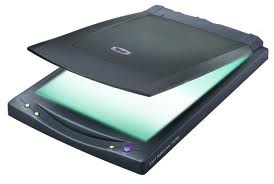
Scanner is an input device. It is used to save pictures or text on paper into computer memory. It converts picture or text on paper in to binary form and saves it in computer memory. With the help of scanner we may save our time to type a lot of text. For example, if we have a book and wish to enter the whole text of book in to computer. It will be a long, tedious and time consuming job. But if we use a scanner, we can do this with in less time. We can scan each page of book. Editing of the scanned text is also possible. So our job will become very easy with the help of a scanner.
There are different types of scanners.

9.    Graphics tablet / digitizer


Digitizer Graphic Tablet
Graphic Tablet - digitizer


A graphics tablet consists of a special pen called stylus and a flat pad. The image is created on the monitor screen as the user draws it on the pad with the help of stylus (special pen). Graphics tablet is also called a digitizer. 

10. Touch Screen

Touch Screen Monitors
Touch Screen - Input/Output device - Dual device - Performs both input and output functions - I/O device


In ATM and in latest smart phones, touch screen is used to receive input from the user. The user enters data by the touch of his finger on different menu options or icons present on touch screen. Actually touch screen is both input / output device. It performs both functions.

11. Digital Camera

Digital Camera for video and picture input
Digital camera - Input device

A digital camera is one of the latest input devices. We can take pictures with he help of digital camera. These pictures are saved on digital camera's internal memory. There is no need of a film role as used in traditional cameras. Later on we can easily input these pictures with the help of a data cable into computer's memory. Latest digital cameras can take still snapshots and can record video as well. 

This is all about Different Types of Input Devices for Computer with pictures / examples.


Find Your Correct Age From Date of Birth

First of all click on First two digits to type Month number from keyboard like any number from 1 to 12. . Now click on next two digits and t...